


FP Notebook
4.967.00 Reviews
App Specs
- Version
- 4.2.0
- Updated On
- License
- Free
- Downloads
- 100,000+
- Developer
- AtmosphereApps
- Categories
- Medical
- Platform
- Android
Screenshots
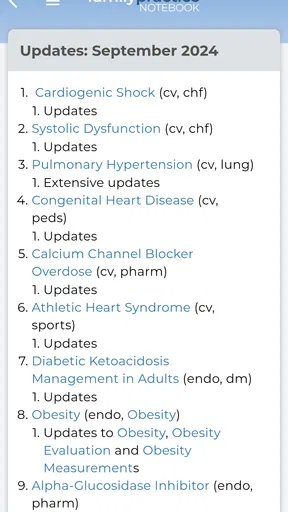
 Analysis by AppCompare
When I need to orient myself around a clinical question, I want a reference that helps me find the right subject quickly without pretending to make the decision for me. That is the role I would give FP Notebook: a pocket reference for primary care and emergency clinicians, useful for checking a topic during a busy day and then returning to clinical judgement, local guidance, and the patient in front of me.
Who this reference is built for
AtmosphereApps develops this free medical app, and its focus makes it most relevant to clinicians who move between common primary-care concerns and urgent presentations. I can also see medical students using it to review topics in manageable bursts, especially when they want a quick orientation rather than a textbook chapter. Its Everyone age rating describes the store classification, not a reason for patients to treat it as personal medical advice.
The distinction matters in practice. A clinician may use a reference to refresh their thinking; a patient facing a new or worsening symptom needs appropriate professional care, not an app-based diagnosis. I would not recommend using a point-of-care reference as a substitute for assessment, emergency services, or the protocols required by a particular workplace.
How it fits into a working day
Imagine a clinician between appointments who encounters a presentation they do not see every day. A focused lookup can help them review the relevant topic, identify what they need to verify, and decide whether a more authoritative or local source is required. The practical value is not that an app settles the case; it is that a well-chosen reference can reduce the time spent hunting across unrelated pages.
For a student, the same approach works as a study routine: choose one topic after a lecture or placement, use the reference to map the basic questions, then check details against course materials and current clinical guidance. I would treat it as a starting point for structured review, not as a replacement for deeper reading or supervised learning.
Compared with other ways to look things up
Compared with a large textbook, a phone-based reference is easier to reach during a short gap and less cumbersome to carry. Compared with a general web search, a focused medical resource can make browsing feel more purposeful and less exposed to unrelated results. But those conveniences do not automatically make every entry the best source for a high-stakes decision. For a local pathway, a rapidly changing recommendation, or a complex case, I would turn to the applicable guideline or a more specialized reference.
That trade-off is the central question for anyone considering it: do you need a quick clinical reference, or do you need an authoritative answer for a specific patient and setting? FP Notebook is better suited to the first job. It should support a clinician’s checking process, not become the only step in it.
Worth Reading Before You Choose

EA SPORTS FC Mobile 26 Is a Bigger Football Game, but It Takes Time

Flipboard Shows What News Apps Must Do Beyond the Feed

Switching to Android Auto Means Rethinking Your Driving Routine

Google Calendar Makes a Crowded Week Easier to Manage

Ludo King Makes the Most of the Minutes Between Plans

Baby Panda World Brings Quick Play to Modern Phones, but Its Game Library Feels Busy
What Makes FP Notebook Stand Out?
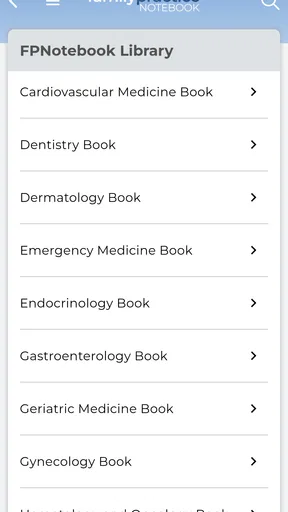
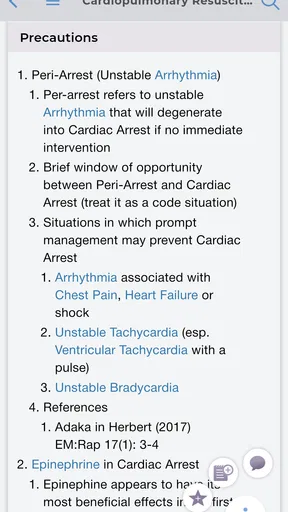
The first thing that caught my eye about FP Notebook is its comprehensive coverage of various medical topics. Whether you’re dealing with cardiology, dermatology, or even urgent care, this app has got you covered. The developers have done an impressive job compiling an extensive amount of information into one user-friendly platform.
One of the features I really appreciate is the app's clean and intuitive design. You don’t need to be a tech wizard to navigate through it. The layout is straightforward, making it super simple to find the information you need without any hassle.
Features That Make It a Must-Have
Let’s talk features. This app is chock full of them, and they’re all designed to make your life easier:
- Offline Access: This is a lifesaver when you’re in areas with spotty internet. You can download the content you need and access it anytime, anywhere.
- Regular Updates: The medical field is always evolving, and the app keeps up with the latest guidelines and research thanks to its consistent updates.
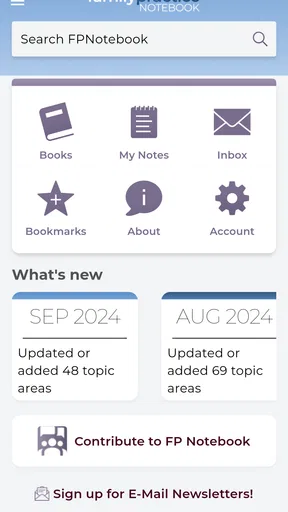
- Search Functionality: The search feature is robust, allowing you to quickly find specific topics or terms without scrolling endlessly.
- Bookmarking: You can bookmark frequently used sections for quick access later. It’s like having your own personalized medical cheat sheet.
Another feature that deserves a shoutout is the app's ability to sync across multiple devices. Whether you’re using your phone, tablet, or computer, FP Notebook ensures that your saved data is always at your fingertips.
Making a quick lookup more useful
Search is most valuable when I use it with a clear question in mind. Rather than browsing broadly during a pressured moment, I would search for the specific topic I need, read the relevant material, and note what still needs confirmation. That habit helps keep a compact reference in its proper role: an aid to finding information, not a shortcut around careful assessment.
Bookmarks can make repeat tasks more efficient, but I would keep them deliberate. Saving a small set of topics I genuinely revisit is more useful than bookmarking everything and turning the list into another place to search. For clinicians working across different settings, it is also sensible to check that a saved reference is still appropriate for the patient and local practice before relying on it.
Offline access is useful when connectivity is unreliable, but it is worth thinking ahead rather than discovering that limitation at the bedside. I would open the material I expect to need while connected and confirm that it is available before heading into a low-signal environment. Offline convenience does not itself establish that content is current, so I would still verify time-sensitive guidance through the proper channel.
Why You’ll Love It
Now, I know you’re probably wondering, "Is this app really worth it?" Well, let me tell you why I believe it is. Firstly, the convenience of having a reliable medical reference accessible at any time is invaluable. No more flipping through bulky textbooks or searching online for hours.
The community aspect is also worth mentioning. Users can share tips and insights, creating a collaborative environment where everyone benefits. It’s like having a support group of medical professionals ready to offer guidance.
Plus, let’s not forget about the peace of mind it offers. Whether you’re a seasoned doctor or a medical student, knowing you have a trustworthy resource to back you up is reassuring.
"FP Notebook is like having a mentor in your pocket, always there to guide you through challenging medical scenarios."
Version, value, and what I would check
The app is currently at version 4.1.14, and it has been available since June 3, 2014. That gives readers a useful picture of an established product with a current version to install, but a version number alone cannot tell me how recently a particular medical topic was reviewed. I would check the date and source of any guidance that could affect care, rather than assuming that a familiar app or a newer release makes every detail current.
Its average rating is 4.9 from around 1.1 thousand ratings, with 68 written reviews, and it has passed 100 thousand installs. Those figures suggest that many users have chosen it, but ratings measure user satisfaction rather than clinical accuracy. I would use feedback to judge whether the app suits my workflow, not as a substitute for checking recommendations against trusted clinical sources.
The download is free, while in-app purchases range from $1.99 to $24.99 per item. I would try the free experience first and decide whether any paid item addresses a specific need before spending. If you need an institution-approved tool, a specialty-specific reference, or a resource with an explicit workflow for your local protocols, compare those options before making this your default.
Where I would be cautious
The main limitation is not a lack of convenience; it is the risk of asking a general reference to do too much. A concise entry may help frame a question, but a complex patient can require context, examination, follow-up, and local decision pathways that no quick lookup can replace. I would be especially cautious when recommendations depend on patient-specific factors or when a delay in care could be harmful.
There is also a practical learning curve in deciding what not to take from a reference. Students may be tempted to memorize compact summaries without understanding the reasoning behind them; experienced clinicians may assume a familiar topic has not changed. I would use the app to prompt further checking, and I would keep textbooks, formal guidelines, and colleagues in the loop when the situation calls for more depth.
Before relying on any reference for a recurring task, I would test the workflow when there is no pressure: search a topic I know, see whether the result is easy to locate, and check whether the content answers the kind of question I actually have. That small trial tells me more about fit than browsing a long list of topics. If finding a relevant entry feels awkward in a calm moment, it is unlikely to become a dependable habit during a busy shift.
Final Thoughts
In conclusion, if you’re in the medical field, FP Notebook is a tool you shouldn’t be without. Its extensive library of medical knowledge, combined with user-friendly features, makes it an essential app for anyone serious about their practice.
Whether you’re in a bustling hospital or a quiet clinic, this app is your go-to resource for quick and reliable medical information. So, if you haven’t already, give it a try and see how it can enhance your medical expertise. You won’t regret it!
What to expect from it over time
For existing users, the current version offers a reason to keep the app available if its reference style already fits their routine, while the long-running release history makes it familiar to people who have used it across different stages of training or practice. I would still periodically revisit saved topics and my own habits: a bookmark is a convenience, not a guarantee that the material remains the right fit for a new patient or a changed local process.
What I would watch for in future use is whether updates make it easier to judge the currency and relevance of clinical material, and whether the search and saved-content workflow continues to suit quick point-of-care checks. Those are the details that matter most to me in a medical reference. If you want a compact aid for primary-care and emergency topics and are comfortable verifying consequential decisions elsewhere, it is worth trying; if you need a definitive, locally governed answer or patient-facing diagnosis, choose a more appropriate source instead.
Pros
- Comprehensive medical reference.
- Regularly updated content.
- Offline access available.
- User-friendly interface.
- Covers a wide range of topics.
Cons
- Requires a subscription for full access.
- No interactive features.
- Limited multimedia resources.
- Interface can feel outdated.
- Some sections are text-heavy.
FAQs for FP Notebook
What is FP Notebook and who is it for?
FP Notebook is a comprehensive medical reference app designed for healthcare professionals, particularly those in family practice and primary care. It provides quick access to a wealth of medical information, including diagnosis and treatment guidelines, making it an essential tool for doctors, nurses, and medical students seeking reliable, up-to-date resources.
Is FP Notebook available offline?
Yes, FP Notebook offers offline access to its vast library of medical content. This feature is particularly useful for healthcare professionals who may need to access information in areas with limited or no internet connectivity, ensuring that they have the necessary resources at their fingertips at all times.
How frequently is the FP Notebook content updated?
FP Notebook is regularly updated to ensure that medical information remains current and accurate. The developers work closely with medical experts to incorporate the latest guidelines and research findings, making it a trustworthy source for clinicians who need to stay informed about new developments in the medical field.
What platforms is FP Notebook available on?
FP Notebook is available for both Android and iOS devices, making it accessible to a wide range of users. This cross-platform availability ensures that healthcare professionals can use the app on their preferred device, whether it’s a smartphone or a tablet, enhancing convenience and usability.
Does FP Notebook require a subscription?
FP Notebook offers a subscription model that provides full access to its extensive library of medical resources. While there may be some free content available, subscribing allows users to unlock all features, including regular updates and offline access, ensuring that they have comprehensive medical information readily available.


